Buying guide for best truck tires
Ready to buy now? Shop the best:
SUVs and pickup trucks are such appealing vehicles to me because of how well they handle rugged terrain. While 4-wheel drive ensures your truck or SUV can do so, don't underestimate the importance of a solid set of tires. If you plan on doing any off-roading, heavy-duty all-terrain tires — or max-traction tires if you're going to encounter serious mud — are needed, whereas city drivers should consider lighter highway-terrain tires, which will give you better gas mileage.
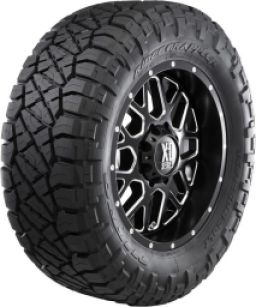
We looked into the best truck tires, including what sets them apart from sedan tires, which types are available and how much you should expect to pay. I'm impressed by how many good tires are out there for trucks and SUVs, including our top pick, the NITTO Ridge Grappler All-Season Radial Tire, but there are a few key things to consider before you run out and buy yours.
Truck tires vs. passenger car tires
You shouldn’t put the same type of tires on your pickup that you put on your sedan. Why? Here are some of the biggest differences between tires for a sedan and tires for a truck.
Size: A truck tire is larger and heavier than a sedan tire. This is understandable, as more support is needed for the extra weight of an SUV or pickup. Larger tires also cost more than smaller tires.
Type of rubber: Truck tire rubber is harder in order to handle the weight of the larger vehicle. Sedan tire rubber is softer, giving the car the ability to handle the road with a better grip.
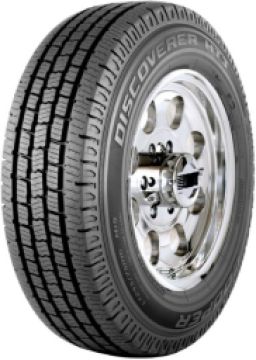
Tread pattern: Truck tread is squarish and deeper than sedan tread. This allows it to dig into the terrain, resulting in better traction on uneven roads. Sedan tire tread is shallower and narrower. For paved roads, this is ideal.
Sidewall construction: Due to the heavier loads it may carry, a truck tire needs a thicker sidewall than a car tire. The thicker material helps the tire maintain its shape under stress. However, this thicker construction isn’t going to give you the smooth ride that a car tire offers.
Puncture resistance: Generally speaking, truck tires resist punctures better than car tires. This is because truck tires are designed to be more hardy and durable in rough conditions.
Truck tire codes
Both car and truck tires have a code printed on the sidewall. The code tells you quite a bit about the tire, including its use case and size. Your particular model of SUV or pickup truck will need certain tire sizes and specifications. Always follow the recommendations of your vehicle’s manufacturer when it comes to this.
Here’s a breakdown of the information you’ll find in the tire code.
Tire type
The start of the code may have one or two letters. An “LT” indicates a tire made for light trucks, including most SUVs and pickup trucks. A “P” is a tire primarily used for passenger cars, although some small SUVs and pickup trucks can also use “P” tires.
If there is no letter at the start of the code, it’s a tire designed for use in Europe – although you can use it legally in North America if it’s the right size for your truck.
Tire width
The number following the letter code indicates the width of the tire in millimeters. Truck tires typically run between 215 and 275 millimeters in width.
Aspect ratio
The number after the slash mark is the ratio of the tire’s cross-section height to its width. Tires with a larger aspect ratio have a larger sidewall. For trucks, common aspect ratios range between 65 and 75.
For your safety
Tires will last longer and perform better when properly inflated. Start a habit of checking your tire pressure at each gas fill-up.
STAFF
BestReviews
Construction type
The letter after the aspect ratio reflects construction type. An “R” denotes radial construction, which means layers of the tires run radially. Radial construction is typical for truck tires. Occasionally, you’ll see a “B” for bias construction. The layers of these tires run diagonally.
Rim diameter
The two-digit number after the construction type indicates the rim diameter. This number is equal to the width of the wheel from end to end in inches. Rim diameters between 16 and 20 inches are common for SUVs and pickup trucks, although other sizes are available too.
Other information
Some of the other numbers and letters in the code may indicate things like load index, speed rating, and traction grades. You may also see the term “DOT” imprinted on the tire; this indicates that the tire adheres to U.S. federal safety standards.
Some tires also have a unique identification number that indicates manufacturing date and location. However, this information does not appear on every tire.
Expert Tip
If you tend to drive your truck in extremely rough conditions then a tire with large, deep treads may be your best bet, as this type of tire gets better traction.
STAFF
BestReviews
Truck tire prices
Although they may look similar, truck tires vary quite a bit in cost. Here are some general price ranges you can expect to encounter.
-
Economy truck tires: An economy-style truck tire is designed primarily for use on pavement. It’s also made for smaller pickups and SUVs. You can expect to pay $75 to $125 apiece for this type of truck tire.
-
Mid-range truck tires: A mid-range truck tire can be used on pavement or in rough terrain, although it’s not recommended for extreme off-roading work. These tires cost $125 to $200.
-
Specialty truck tires: Specialty truck tires often have deep tread for rough off-roading. Some include raised stone ejectors to keep rocks out of the tread. These tires are often much larger than average, and you can expect to pay $200 to $350 per tire in this category – although some specialty tires can cost up to $500.
-
Other costs: If you will have the tires mounted by an auto repair center, you can expect to pay another $10 to $30 per tire for mounting and balancing. If you’re disposing of old tires, you may have some recycling fees to pay – $1 to $5 per tire is common.
If you’ll be driving your SUV or pickup truck primarily on pavement, a less-expensive tire would probably serve you well. However, if you plan to use your SUV or pickup as a working or recreational vehicle where road conditions are less than ideal, a higher-end tire may better fit your needs.
Bear in mind that some online retailers will give you a slight discount when you purchase four tires together, and some offer discounts to first-time customers.
FAQ
Q. Should I choose an all-terrain tire or a highway tire for my truck?
A. Base the choice on the driving you actually do, including the roughest conditions you encounter regularly. The NITTO Ridge Grappler is our option for drivers who want more off-road capability, while the Cooper Discoverer HT3 is a highway-oriented choice for compatible light trucks.
Neither is automatically right for every pickup or SUV. Compare the available sizes and ratings with your vehicle's requirements before weighing tread design, road noise, and price.
Q. How do I know the tire in an online listing will fit my vehicle?
A. Check the complete size, load capacity, and speed rating against the vehicle manufacturer's specifications, including any requirements for your wheel setup. The Yokohama Geolandar A/T G015 listing in our picks is a specific 215/65R16 98H tire, but that doesn't mean that every Geolandar size fits your truck.
Q. Can I treat an all-terrain tire as a winter tire?
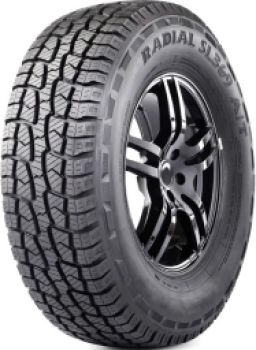
A. Don't assume the words all-terrain or all-season guarantee the winter performance you need. The Westlake SL369 All-Terrain Truck Tire is our mixed-surface option, but check the tire's winter markings and the manufacturer's guidance before choosing it for snow or ice.
Our expertise
Kevin Luna has a love for all things tech, sports, fitness and gadgets. As a longtime writer for BestReviews, he enjoys writing engaging, high-quality guides to help shoppers make smart buying decisions.
Kyle Schurman covers a wide range of products, from cameras to automotive parts to sports equipment, as a writer for BestReviews.