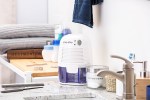
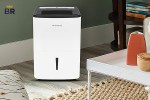
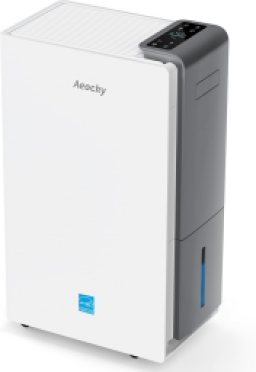
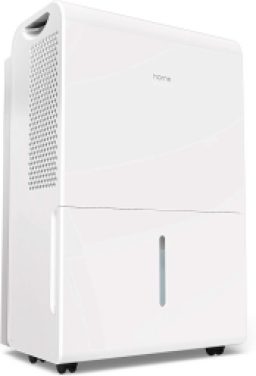
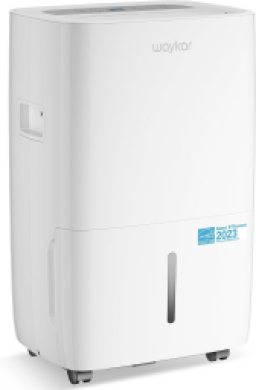
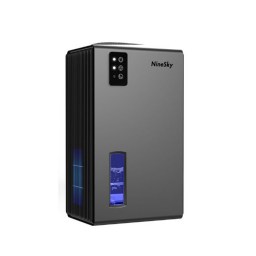
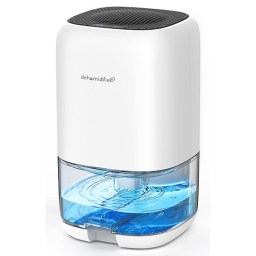
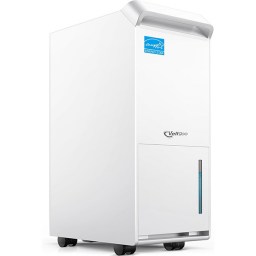
Buying guide for Best dehumidifiers
Ready to buy now? Shop the best:
Depending on where you live, humidity can range from being a minor nuisance to a destructive force. Too much humidity in your home can cause your wood to rot while it facilitates mold growth. You don't want to take any health or safety risks by purchasing an inferior dehumidifier.
The best models have a hygrometer that monitors how much moisture is in the air and automatically turns the unit on whenever those levels exceed desirable limits. You can also get a unit with a programmable timer so it only operates at designated times. An Energy Star certified dehumidifier with a high-capacity tank that is adequately sized for your room or home is ideal.
Dehumidifiers come in different sizes. When we research them, we make note of their capacity and whether they are suitable for small spaces, several rooms, or entire homes.
The tank size of a dehumidifier determines how much water it can hold before it must be emptied. Capacities range from 12 ounces to 70 pints per day. We assess the capacity of each model we recommend.
When we research dehumidifiers, we assess the controls, which are either dial or digital. While dial control operation is straightforward, digital controls offer more precise humidity control.
We consider how noisy a dehumidifier is when it's running. Does the sound interfere with the TV? Does it keep you awake at night? These are questions our readers want answered before they buy.
A timer is a convenient feature found on some models. When researching a dehumidifier, we find out whether it has a timer, which can help save energy.
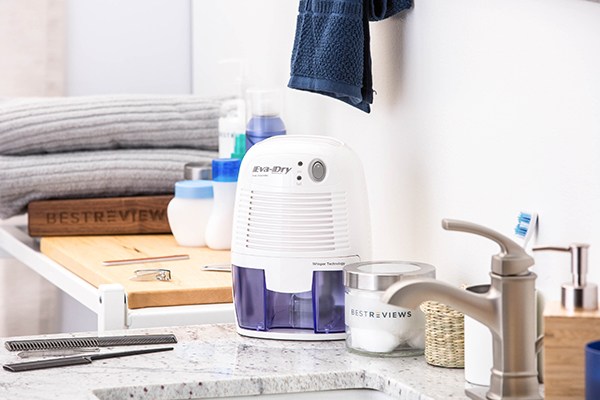
Some dehumidifiers are compact and suitable for small spaces. Although they aren’t powerful enough for large rooms, we take into account how effective they are at removing moisture from areas like small bathrooms.
Dehumidification power is measured in cubic feet per minute, or CFM. When we assess a dehumidifier, we note how CFM correlates to capacity — the higher the capacity, the higher the CFM.
Prices range from as low as $30 to as much as $300 or more. In most cases, dehumidifiers with a larger capacity cost more. Before recommending a product, we assess its value for the money.
Our readers want to know how a dehumidifier can improve their indoor environment. We reference the benefits of the models we recommend, including allergen reduction, dampness removal, and mold prevention.
We take into consideration how easy or difficult a dehumidifier tank is to remove and empty when full.
Why buy a dehumidifier?
A top-of-the-line dehumidifier is a fairly large purchase, so you might be on the fence about whether or not to buy one. If you can’t decide, here are some reasons why a dehumidifier is a smart buy.
-
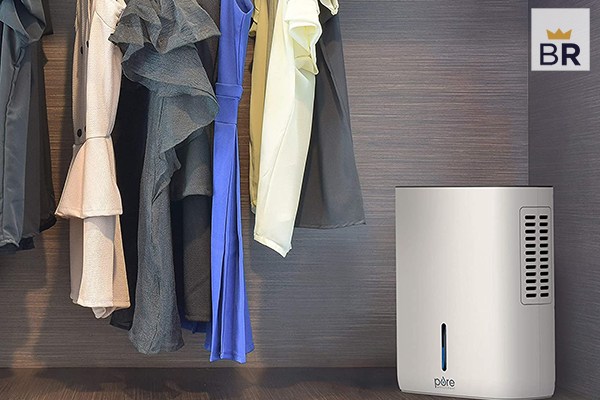
Dehumidifiers decrease the likelihood of mold growth on your walls, around your windows, and in your linens and clothing.
-
Dried foods such as grains, flour, and cereal last longer in a less-humid environment.
-
Small dehumidifiers in bathrooms help towels dry and stop mold from forming around tiles — especially if you don't have a ceiling fan.
-
In the event of flooding, a powerful dehumidifier will dry your home out faster.
-
Lower humidity can curb certain allergens, such as dust mites and mildew.
-
Dehumidifiers can reduce dampness in the walls and help get rid of musty smells.
Dehumidifier considerations
Capacity
Think about how much moisture you'll need your dehumidifier to handle. Caroline says you need to purchase a dehumidifier that fits your size home and area you want to dehumidify, as well as the climate (dew point is a more reliable measure to consider than temperature).
-
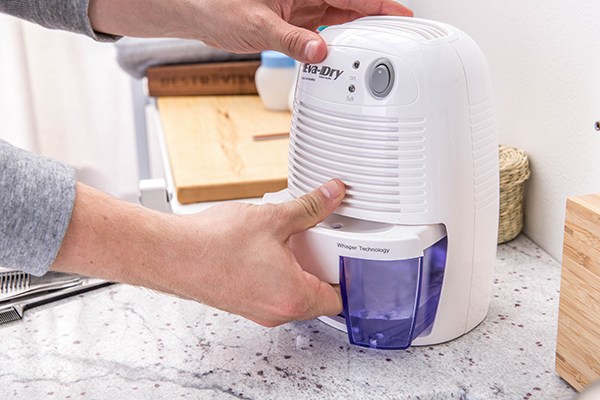
Mini-capacity dehumidifiers remove 12 to 25 ounces of moisture per day. They're not designed to dehumidify whole living spaces but can be useful in bathrooms and crawl spaces.
-
Small-capacity dehumidifiers remove 20 to 30 pints of moisture per day, so they're best for small spaces that are damp but not wet.
-
Medium-capacity dehumidifiers remove 40 to 50 pints of moisture per day. Use them for medium-sized spaces or large spaces that are only slightly damp.
-
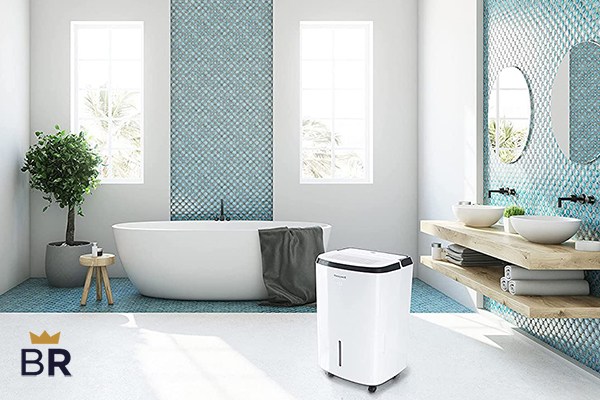
Large-capacity dehumidifiers remove up to 70 pints of moisture per day, so they can tackle large, wet spaces.
Testing dehumidifiers
After researching 103 dehumidifiers, we purchased two that made it into our top tier. We tested their ability to thoroughly dehumidify a home as well as the noise they produce.
STAFF
BestReviews
Controls
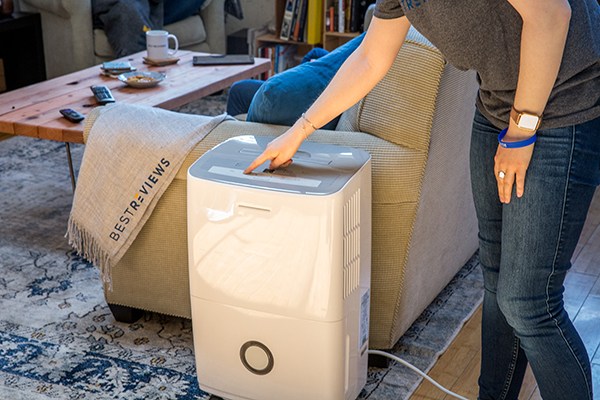
Most dehumidifiers have either a simple dial or digital controls.
Those with a dial typically allow you to choose between a few pre-set humidity levels, such as "normal," "dry," and "very dry."
Those with digital controls allow for much greater precision when selecting a humidity level.
Timer
Many dehumidifiers have timers, letting you set the time of day you want the unit to switch itself on.
This is useful if you want the appliance to run while you're out of the house, switch itself on at night when your electricity use is lower, or if you're simply likely to forget to turn it on.
Tank size
All that moisture removed from the air has to go somewhere — and that somewhere is a tank inside the unit.
Each model is rated for a different cubic feet per minute (CFM) based on the capacity of the dehumidifier, explains Caroline. The greater the capacity of the dehumidifier, the greater the overall CFM of the dehumidifier.
Tanks range in size from around 10 to 75 pints and need to be emptied when full.
The larger the tank, the less often you'll need to empty it, but the heavier it will be when it's full of water.
Noise level
Dehumidifiers aren't the quietest appliances.
Medium- and large-capacity units tend to produce about 55 to 67 decibels when running at full power.
Small-capacity dehumidifiers are quieter but still far from silent.
If you're going to be using the unit in your bedroom at night, look for models with lower noise levels.
Dehumidifier tips
Make the most of your dehumidifier, and deal with dampness and humidity in your home, with these tips.
-
Using a dehumidifier in a dirty room can spread dust and clog the air filter if your unit has one. Vacuum before you use your dehumidifier for the first time. Keep any spaces in which you regularly use a dehumidifier well-vacuumed and dusted.
-
Don’t block the input or output. Station your dehumidifier at least an inch or two from walls, curtains, and furniture.
-
Washing and drying clothes indoors releases a lot of moisture into the air. Placed near your laundry space, a dehumidifier can make a positive difference in humidity.
-
Dehumidifiers can help with dampness, but they won't fix the root cause. Unless your home’s dampness is caused by living in a humid area, it's worth getting an expert to check that you don't have a problem like leaky pipes.
Dehumidifier prices
The main factor affecting the price of a dehumidifier is its capacity. However, it's worth noting that price doesn't necessarily equal quality with dehumidifiers. Just because a unit is expensive doesn't mean it's good. Consult expert and customer reviews to find out whether a specific model is worth its price.
Mini-capacity
A mini-capacity dehumidifier that can remove 12 to 25 ounces per day can cost as little as $30 to $50.
Small-capacity
For a small-capacity dehumidifier capable of tackling up to 30 pints of moisture per day, expect to pay $100 to $150.
Medium-capacity
A medium-capacity dehumidifier that removes up to 50 pints of moisture per day costs around $150 to $200.
Large-capacity
Expect to pay roughly $180 to $300 for a large-capacity dehumidifier that can tackle up to 70 pints per day.
FAQ
Q. Do I need a dehumidifier with a hose connection?
A. A dehumidifier with a hose connection allows you to divert the collected water directly to a drain or sink so you don't have to empty the tank. This can be useful if you're running your unit in a basement with a floor drain or sink — or if the dehumidifier is in a practical location to divert the water straight out of the window into an outside drain or onto your lawn.
Not everyone needs a dehumidifier with a hose connection, but some people find it’s an invaluable feature.
Q. Will a dehumidifier help with my allergies?
A. Running a dehumidifier can help reduce certain indoor allergens. Some allergens — such as mold and dust mites — need a humid environment to thrive. Keeping the humidity in your home below 50% will help reduce allergens.
Q. What is a humidistat?
A. A humidistat tests the humidity in the air, so the dehumidifier can maintain the level you've selected. For instance, if you set a dehumidifier to maintain a room at 50% humidity, the humidistat can tell when the humidity drops to 50% or below, at which point the dehumidifier will switch itself off.
Q. How do I maintain my dehumidifier?
A. You don't need to do much to keep a dehumidifier in good working order. Just make sure you clean the air filter about once a month, empty the tank every one to two days, and occasionally clean the tank to stop the build-up of limescale or bacteria.