Buying guide for best grass seeds
Ready to buy now? Shop the best:
A green, healthy, lush lawn: every homeowner wants one. Achieving that perfect lawn, however, takes a fair amount of work – most importantly, planting or reseeding with the right grass seeds for your area, your yard’s conditions and your lifestyle.
If you aren’t a landscaper or an avid gardener, choosing the right grass seeds can be confusing.
What does “cool season” and “warm season” mean? Is there any hope for that shady area underneath the tree? And what about your kids’ rough-and-tumble games of tag; is there any grass that can survive that?
Your solution might be to grab the first bag of grass seeds you see. After all, grass is grass, right? But before you do that, there are a few things you'll want to consider. Our guide includes all the details you'll need plus some of our favorites, such as the hardy Scotts Turf Builder Grass Seed Sun and Shade Mix.
Editors' picks
Scotts Turf Builder Sun & Shade Grass Seed Mix
Editors' Choice
Type of Grass: Kentucky bluegrass, fescue, perennial ryegrass | Sun Exposure: Full sun to moderate shade | Climate: Midwest, Northeast, Pacific Northwest | Area Covered: 2,240 sq ft | Weight: 5.6 lb
The Scotts Turf Builder Grass Seed Sun and Shade Mix is a popular blend that combines seed, fertilizer and soil improver to help restore lawns or create new ones from scratch. It’s excellent for repairing thin, patchy areas, and the formula allows it to work faster than plain seed.
It works well under varying light conditions, including full sun and moderate shade, and you can cover up to 2,240 square feet with a 15.6-pound bag. It’s best used in spring or fall, when daily average soil temperatures are consistently between 55 and 70 degrees, or air temperatures between 60 and 80 degrees.
It’s one of the most versatile grass seed mixes for homeowners who want a viable solution for fixing patchy lawns or establishing a new one with fescues, ryegrass and bluegrass.
Pennington Smart Seed Sun and Shade Grass Seed Mix
Great Value
Type of Grass: Kentucky bluegrass, fescue, perennial ryegrass | Sun Exposure: Partial sun to moderate shade | Climate: Northeast, Midwest, Pacific Northwest | Area Covered: 1,000 sq ft | Weight: 3 lb
If you live in a northern climate and want an affordable solution for overseeding your lawn, the Pennington Smart Seed Sun and Shade Grass Mix is one of the best options. It’s excellent for areas that receive moderate sun and shade, and a single 3-pound bag can cover up to 1,000 square feet.
It blends fescues, bluegrass and ryegrass, which is perfect for those who want an adaptable lawn. It also includes fertilizer-coated seed that works faster than standard grass seeds. It offers superior drought tolerance and shows results in roughly 8 to 21 days with proper soil preparation and watering.
It’s a versatile seed mix that’ll give you a grass variety, and you can apply it to multiple areas of your lawn regardless of sun exposure or shade density.
Jonathan Green Black Beauty Dense Shade Grass Seed
Best Cool-Season Blend
Type of Grass: Kentucky bluegrass, fescue, perennial ryegrass | Sun Exposure: Partial sun to moderate shade | Climate: Northeast, Midwest, upper Mid-Atlantic, and Pacific Northwest | Area Covered: 300 sq ft | Weight: 1 lb
Jonathan Green Black Beauty Dense Shade Grass Seed, a cool-season blend of Kentucky bluegrass, fescue and perennial ryegrass, is a terrific solution for both new lawns and restorations. It’s designed to grow in areas with limited sunlight and offers strong adaptability across different soil and shade conditions.
It produces a dark green lawn even under trees or near buildings where shade is denser, and it germinates quickly, typically showing results within 14 to 21 days. A single 1-pound bag can cover up to 300 square feet for new lawns, or more for overseeding, making it efficient for small- to medium-sized yards.
It’s terrific for those living in northern climates who need something that’ll grow in areas with limited sunlight. If you’re dealing with patchiness around trees, fences or other structures, you’ll want to consider this mix.
Outsidepride SPF 30 Hybrid Bluegrass Seeds
Best for Challenging Climates
Type of Grass: Texas bluegrass and Kentucky bluegrass | Sun Exposure: Full sun | Climate: Southern | Area Covered: 1,600 to 2,000 sq ft | Weight: 5 lb
The Outsidepride SPF 30 Hybrid Bluegrass Seeds is a hardy, low-maintenance mix of Texas bluegrass and Kentucky bluegrass that deals with long hot summers better than Kentucky bluegrass alone. Great for filling in bare spots, It’s made to handle full sun exposure but does perfectly well in shaded areas too.
Best suited for Southern states or transition zones (USDA Hardiness Zone 6+), a 5-pound bag can cover up to 2,000 square feet. It’s a terrific option for residential lawns or golf courses and can withstand heavy foot traffic well.
This mix features an Optigrowth coating that helps the seeds establish roots quickly, retain moisture and thrive. This makes it a great pick for areas that are prone to long periods of heat.
Scotts EZ Seed Patch & Repair for Sun and Shade
Best for Patching Existing Grass
Type of Grass: Kentucky bluegrass, fescue, perennial ryegrass | Sun Exposure: Full sun to dense shade | Climate: Northeast, Midwest, upper Mid-Atlantic, and Pacific Northwest | Area Covered: 445 sq ft | Weight: 20 lb
The Scotts EZ Seed Patch & Repair for Sun and Shade is excellent in areas with full or limited sunlight. It’s one of the most versatile grass seed mixes for fixing up patchy lawns or creating new ones from scratch.
This blend of Kentucky bluegrass, perennial ryegrass and fescues is a top choice for northern climates and works anywhere in your yard. A 20-pound bag covers up to 445 square feet, making it suitable for small-to-medium-sized lawns, and the mix contains mulch, fertilizer and a protectant to keep seedlings safe and prime them to thrive.
This grass seed mix is low-maintenance and will give your yard a rejuvenated, lush green appearance, even in areas dominated by dense shade, such as near fences or other structures.
Pennington Contractors Grass Seed Mix
Best for Large Yards
Type of Grass: Fescue, annual ryegrass | Sun Exposure: Partial sun to moderate shade | Climate: Northeast, Midwest, upper Mid-Atlantic, and Pacific Northwest | Area Covered: 8,000 sq ft | Weight: 40 lb
The Pennington Contractors Grass Seed Mix offers a blend of fescues and annual ryegrass that flourishes in partial sun or moderate shade. It’s excellent for establishing new lawns, overseeding existing turf and repairing damaged lawn areas in climates such as the Northeast or the Midwest.
A 40-pound bag covers up to 8,000 square feet, and you can plant it in early spring or fall for optimal results. Once germinated, grass grows thick and dense, offering high resistance to sun, drought and traffic.
It’s best for areas that get only four to six hours of sunlight and is an excellent option if you live in northern cities and need to restore your lawn or establish one from scratch. Plus, its large quantity makes it ideal for those with lawns over 5,000 square feet.
Scotts Turf Builder Grass Seed Kentucky Bluegrass Mix
Best Classic Northern Bluegrass Lawn
Type of Grass: Kentucky bluegrass | Sun Exposure: Full sun to light shade | Climate: Northeast, Midwest, upper Mid-Atlantic, and Pacific Northwest | Area Covered: 3,730 sq ft | Weight: 5.6 lb
Those living in regions such as the Pacific Northwest or upper Mid-Atlantic will find plenty to love about the Scotts Turf Builder Grass Seed Kentucky Bluegrass Mix.
Whether you need to restore your original lawn, fix up patchiness or start a new lawn, this seed will give you a lush bed of Kentucky bluegrass. You can plant it when temperatures are between 55 and 70 degrees or when the air temperatures are between 60 and 80 degrees. A 5.6-pound bag offers coverage of up to 1,240 square feet for new lawns and 3,730 square feet for overseeding.
If you want pure Kentucky bluegrass, look no further than this grass seed turf builder. It’s best planted in areas where there’s plenty of sunlight, although it can also thrive in light shade.
Scotts Turf Builder Rapid Grass Sun and Shade Mix
Best for Fast Growth
Type of Grass: Kentucky bluegrass, fescue, perennial ryegrass | Sun Exposure: Full sun to dense shade | Climate: Northeast, Midwest, upper Mid-Atlantic, and Pacific Northwest | Area Covered: 1,495 sq ft | Weight: 10 lb
Overseeding an existing lawn or creating a brand-new one can take some time. However, with the Scotts Turf Builder Rapid Grass Sun and Shade Mix, you can restore patchy areas or get a lush new lawn in just two to three weeks.
This mix includes various grass varieties, including fescues, perennial ryegrass and Kentucky bluegrass. It can thrive in areas with heavy daily sunlight or dense shade, making it one of the more versatile grass seeds. A 10-pound bag covers up to 1,495 square feet, and you can apply it when temperatures are consistently between 60 and 80 degrees.
This grass seed mix works twice as fast as other products, making it the ideal choice for anyone who needs a quick fix for problem areas.
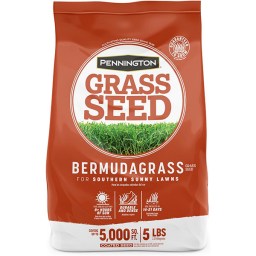
Pennington Bermudagrass Grass Seed
Best Warm-Season Southern Grass:
Type of Grass: Bermudagrass | Sun Exposure: Full sun | Climate: Southeast, South Central, Southwest and Coastal South/Gulf Coast | Area Covered: 5,000 sq ft | Weight: 5 lb
There are plenty of grass seeds to choose from for northern climates. However, those living in a southern or coastal state will want to check out the Pennington Bermudagrass Grass Seed for overseeding or establishing a lawn.
This Bermudagrass seed is designed to thrive in warm or hot climates, including southern states, such as Arizona, Texas, Louisiana and Florida. It’s the best option if you have a lawn with prolonged daily sunlight exposure, and with a 5-pound bag, you can cover up to 5,000 square feet.
It’s an extremely wear-resistant turf and is much more drought-tolerant than other grass varieties, making it a solid choice for dry regions. Plus, it’s specially formulated to produce fewer grass clippings and includes technology to enhance germination.
Jonathan Green Heavy Traffic Grass Seed
Best for Pet Owners
Type of Grass: Fescue, perennial rye grass | Sun Exposure: Full sun to moderate shade | Climate: Northeast, Midwest, Upper Mid-Atlantic, Pacific Northwest and Transition Zone | Area Covered: 2,800 sq ft | Weight: 7 lb
Maintaining a lawn can be challenging if you have kids or pets that frequently walk all over it. However, Jonathan Green Heavy Traffic Grass Seed can help you keep it in pristine condition, even with heavy traffic.
It’s a blend of fescues and perennial ryegrass that thrives best in full sun or moderate shade. A 7-pound bag covers 2,800 square feet, making it suitable for medium-sized lawns. The grass varieties are very green, especially with consistent watering, and many customers report a germination rate within two weeks.
It’s a bit on the expensive side compared to other grass seeds, but it delivers an outstanding growth rate and thick, dense grass that works wonders in repairing patchy areas or establishing rich lawns.
Pennington Smart Seed Dense Shade Grass Mix
Best for Dense Shade
Type of Grass: Fescue | Sun Exposure: Partial sun to moderate shade | Climate: Northeast, Midwest, upper Mid-Atlantic, and Pacific Northwest | Area Covered: 1,750 sq ft | Weight: 7 lb
Dense shade can be a real pain when you want to create a new lawn or repair patchy areas in your existing lawn. However, the Pennington Smart Seed Dense Shade Grass Mix delivers a full lawn wherever shade dominates.
It features a blend of shade-tolerant grass varieties, primarily fescues, that germinate in limited light. It’s great for reducing the appearance of bare spots, and once established, you won't have to worry about watering.
It’s one of the best options for shaded or transitional zones where grass struggles to grow. The 7-pound bag covers up to 1,750 square feet, requires only 2 to 6 hours and delivers lush fescues that thrive in northern climates. Plus, most users report results within eight days.
How we analyzed
When researching grass seeds for this guide, the three primary factors we considered were grass type, climate and sun exposure. We wanted to include several grass varieties that are designed to handle different conditions, including heavy traffic, sun exposure and drought. We also selected grass seeds that can thrive in dense shade, and both northern and southern climates.
Warm-season vs. cool-season grass seeds
There are many types of grass commonly grown for lawns, but they generally fall into two categories: warm-season grasses and cool-season grasses.
Cool-season grass seeds
Cool-season grasses prefer the milder summer temperatures of the northern states, and they tend to turn brown if temperatures get too hot. They also go dormant during the coldest stretch of winter. Plant cool-season grass seeds in the late summer through early fall.
Some common cool-season grasses include the following.
-
Kentucky Bluegrass: Kentucky bluegrass has a beautiful blue-green color and fine texture. It tolerates cold and heavy foot traffic and fills in quickly.
-
Fescue: Fescue grass tolerates shade, drought, and heavy foot traffic.
-
Perennial Ryegrass: Perennial ryegrass germinates and grows very quickly and tolerates heavy foot traffic. It is very glossy and attractive.
Warm-season grass seeds
Warm-season grasses thrive in the mild winter/hot summer areas of the U.S., including the South, the Southwest, and Southern California. Typically, warm-season grasses go dormant and turn brown over the winter. Plant warm-season grass seeds in the spring.
Some of the most popular warm-season grasses include the following.
-
St. Augustine: St. Augustine grass tolerates heat, sandy soil, and shade. Its thick growth suppresses weeds.
-
Bermuda: Bermuda grass tolerates heat, drought, and heavy foot traffic and grows quickly.
-
Zoysia: Zoysia grass tolerates partial shade, heat, heavy foot traffic, and drought but is a slow grower.
-
Bahia: Bahia grass is disease-resistant and tolerates sandy soil, heat, drought, salty conditions, and heavy foot traffic. It grows very thick and suppresses weeds.
-
Centipede: Centipede grass is a slow grower that tolerates some shade and sandy soil. It doesn’t need as much fertilizer as many other types of grass.
Single variety, blended, or mixed seed?
When shopping for grass seeds, it helps to understand the difference between single variety, blended, and mixed seed.
Single variety grass seeds
Single-variety grass seeds, also labeled “straight” grass seeds, contain one type of grass. Generally, only warm-season grasses are sold as single variety seeds. When your lawn is just one type of grass, it looks very even, but it is also more prone to disease.
Blended grass seeds
Blended grass seeds contain several different varieties of the same grass species. This capitalizes on the strengths of each grass variety but still gives a uniform appearance, as different varieties of the same species will usually be close in appearance.
Mixed seed grass seeds
Mixed seed grass seeds contain several different types of grass. Grass seeds labeled for specific conditions, such as “Shade,” “High Traffic,” or “Sun & Shade,” are typically mixed seed. Mixed seeds don’t create a lawn as uniform as a single variety or blended seeds, but they do provide the benefits of different varieties and are generally more disease-resistant. The majority of homeowners plant a mixed seed lawn.
How to read the label for grass seeds
Before buying a bag of grass seeds, you need to understand the information on its label.
-
The package will indicate any special benefits of the seeds, such as heat tolerance, shade tolerance, good for heavy foot traffic, or weed resistance.
-
If you are buying a seed mix or blend, check out the percentages of each included variety. If the varieties aren’t listed, pass on that brand.
-
The instructions should state how many square feet the grass seeds will cover. Be sure you know how large your lawn area is before you buy.
-
Check out the germination rate of the seeds, which means how many seeds you can reasonably expect to actually sprout. There is no such thing as a 100% germination rate for any type of seed, but a germination rate of 75% or better is ideal.
-
Any bag of grass seeds will have a certain amount of inert filler, such as dirt or chaff. However, the filler should be less than 2%.
-
The label will indicate the percentage of weed seeds – these creep in no matter what brand you choose – but that rate should not be more than 0.5%.
-
Check the grass seeds’ expiration date. Don’t buy seeds that are past that date; the germination rate falls sharply beyond that point.
Consider your specific grass seed needs
Once you understand the basics, it’s time to get specific. Let’s take a look at what to consider when deciding which grass seeds are right for your yard.
-
How much sun does your yard get? Look for a seed variety or mix that is full-sun tolerant if your yard gets six hours or more of direct sunlight each day.
-
Are there any shady spots underneath trees? Or is the whole yard shaded? It’s admittedly tough to grow grass in a heavily shaded area, but there are varieties that tolerate partial shade, meaning just a few hours of sunlight per day.
-
Do you have dogs? Dogs might be man’s best friend, but they are definitely not your lawn’s good buddy. While there are varieties of grass that tolerate dog urine better than others, if you really want your lawn to look nice, consider training your pooch to use a small patch of artificial turf or a gravel area fenced off just for him.
-
Does your lawn get heavy foot traffic? While any variety of lawn grass should tolerate at least light foot traffic, some varieties are much more forgiving than others. If you have kids that play outdoors or you like to host neighborhood football games, you’ll want a grass blend specifically geared towards heavy use.
-
Are you just patching up holes or damage? If your lawn is mostly in good shape, but you want to fill in a few small holes or damaged spots, you’ll find a wide range of seed blends mixed with fertilizer to quickly cover the spot with new grass.
How much do grass seeds cost?
The price of grass seeds depends on the size of the bag, the type of seed, any particular added materials such as fertilizer, and the brand.
But as a general rule, you should expect to pay $10 to $25 for a good-quality, three-pound bag of grass seeds.
Tips for planting grass seeds
You’ve purchased the right grass seeds for your area, your specific yard, and your lifestyle. Now it’s time to plant.
-
Work the soil in the area to be planted. Break up clods, remove rocks, and pull any weeds or undesired growth.
-
Add compost or fertilizer to the soil, and mix it in thoroughly.
-
Water the area you’ll be planting, then wait a day or two before seeding.
-
If you’re seeding a small area, go ahead and use a hand broadcast spreader to spread the seed. If it’s a large lawn, however, buy or rent a push lawn spreader for even sowing.
-
Follow the directions on the package regarding how thickly to spread the seeds. Make two passes over the area you’re planting: one vertically and one horizontally.
-
Cover the seeds with straw or a very light layer of compost after sowing. Then rope off or put barriers around the area to prevent foot traffic.
-
Water the planted area lightly, and if it doesn’t rain, continue to lightly water the area daily until you see growth. Depending on the type of grass, this could be anywhere from a few days to a week or more.
-
Once your grass has sprouted, cut back on the watering but don’t let the soil dry out completely.
-
Once the new turf is around three inches high, it’s time to mow. At this point, the grass should be able to tolerate light foot traffic.
FAQ
Q. Can I spread grass seeds over an existing lawn?
A. Many people in warm winter areas overseed their lawns with annual rye or similar “temporary” grass seeds to keep the lawn looking good through winter. However, if you are planting a new lawn or trying to reinvigorate a very damaged, thin, or unhealthy stretch of grass, take the time to prepare the soil thoroughly, which means removing any existing grass, weeds, or other plants, before sowing the new seeds.
Q. Is it a good idea to buy grass seeds with fertilizer already included?
A. While you’ll pay more for pre-fertilized grass seeds, you’ll save time. These ready-to-go bags make the job of planting much easier. Some even include weed killers for the maximum in convenience.
Q. When should I fertilize my grass?
A. It depends on where you live. In cold winter areas, apply lawn fertilizer in the early fall or late spring. If you live in a mild winter area, feed your grass in the early spring.